Author: Ismael Zarate

  • Storage & Pantry Cabinets

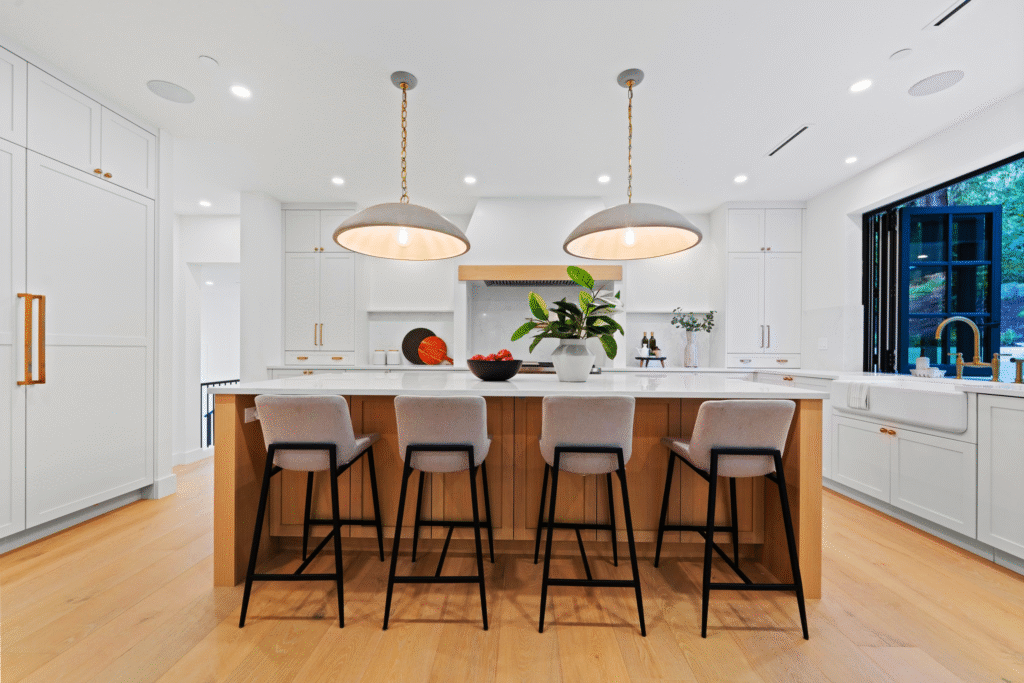
    [PHOTO] – 1 hero photo (wide) showing a modern space with a tall pantry and clean-lined storage cabinetry.
    Alt text: “Custom tall pantry and storage cabinets in a modern Metro Vancouver home.”

    A well-planned storage strategy does more than hide clutter — it streamlines daily routines, protects groceries and gear, and adds resale value. This page focuses on Tall Cabinets.

     Pantry Cabinets (a dedicated vertical for food storage solutions) and Storage Cabinets (utility-first cabinetry for laundry rooms, mudrooms, garages, home offices and living spaces). Both of these, as you might have guessed, are Tall Cabinets.

    Pantry Cabinets: Max Storage Without the Bulk

    [PHOTO Gallery] – Alt texts:

    “36-inch pantry cabinet with drawers and tray dividers.”

    “24-inch pull-out pantry with soft-close slides.”

    “30-inch tall pantry cabinet with adjustable shelves.”

    While Pantry Cabinets often live near cooking zones, the goal is dedicated, high-visibility storage for food, small appliances and bulk items — with interiors engineered for weight, reach and ventilation.

    What works best in Metro Vancouver homes:

    • Narrow/tall formats (12–18″ wide; 84–96″+ high) to carve space out of tight floor plans.
    • Pull-out systems on high-quality slides for easy access; ideal for spices, cans and bottles.
    • Adjustable shelving to handle mixers, air fryers and bulk groceries.
    • Drawer-in-tall setups for heavy items at ergonomic heights.

    Pull-Outs, Shelves, or Drawers: Which One Fits Your Routine?

    [PHOTO] – 1 clean CAD-style diagram of a pull-out unit.
    Alt text: “Technical diagram of a soft-close pull-out pantry system.”

    Pull-Outs

    Best for high-frequency, smaller items (spices, cans, condiments).

    Fixed Shelves

    Best for: appliances and bulk packages.

    Sizing Guide for BC Homes

    Standard Pantry Cabinet Sizes

    WidthHeightDepth
    15-36″ (3″ steps)84-96″ (3″ steps)12 & 24″

    Storage Cabinets for Laundry, Garages & Living Spaces

    [PHOTO GALLERY] – Gallery of 3 photos showing utility storage (doors/shelves), a tall laundry cabinet, and a metal garage unit.
    Alt texts:

    “Metal storage cabinet for garage tools.”

    “Utility storage cabinet with doors and shelves.”

    “Tall storage cabinet for laundry essentials.”

    Storage cabinets cover utility-first needs beyond the pantry category: laundry rooms, mudrooms, garages, home offices and living areas.

    Storage Cabinet Standard Sizes

      WidthHeightDepth
      15-36″ (3″ steps)84-96″ (3″ steps)12 & 24″

      Materials & Hardware That Last on the Coast

      [PHOTO] – Close-up of edge-banded panel and soft-close hinge.
      Alt text: “Edge-banded melamine panel with soft-close hinge and undermount slide.”

      Box Materials

      • Melamine on particleboard: cost-effective, cleanable; specify high-density cores and sealed edges.
      • Plywood: strong, good screw-holding; preferred for tall loads and humid zones.

      Hardware

      • Soft-close hinges  to keep tall doors aligned and avoid noisy slamming.
      • Touch Latch system, instead of pulls on doors high over the floor.

      Pricing & Lead Times in Metro Vancouver

      A typical delivery time for a full unit’s Standard Cabinetry (Kitchen, Garage, Office) is 6-8 weeks. For projects with heavy customization or painted finishes, expect an additional 2–4 weeks.

      For individual cabinets or small-quanity orders, delivery times can be shorter.

      Cabinet pricing varies depending on materials, finishes, and customization. To get an accurate quote tailored to your space and style, we recommend speaking with one of our designers.
    • Bathroom Cabinets & Vanities

      The right vanity and storage plan can make any BC bathroom feel larger, calmer, and more functional. Drawing on hands-on manufacturing and CAD/CAM experience from leading cabinet factories in Vancouver, this guide focuses on what actually works in local homes—sizes, materials, lead times, and installation notes—so projects run smoothly from design to handover.

      Find the Right Bathroom Vanity (Single vs. Double, Small to Large Spaces)

      Start with the space: overall width, door swing, plumbing locations, and code clearances. In many Lower Mainland condos and laneway homes, a 24″–30″ single is the sweet spot. Family bathrooms often step up to 36″–48″, while primary suites justify 60″ double when morning routines truly overlap.

      Quick chooser

      • Powder room (tight) → 24″ single, shallow depth.
      • Full bath (compact) → 30″–36″ single with drawers.
      • Family bath → 42″–48″ single or narrow 60″ double.
      • Primary suite → 60″ double with split storage.

      Local insight: where storage matters more than a second sink, a single basin preserves a full drawer stack and simpler plumbing.

      Standard sizes (24″–60″) and typical depths

      Common widths are 24″, 30″, 36″, 48″, 60″; depths typically 18″–21″. Older Vancouver houses may have baseboard radiators, offset drains, or trims that steal precious centimeters—measure everything, including door swings and trim projections, before finalizing the spec.

      SInk CabinetsWidthHeightDepth
      Floor-Standing Vanity9-30″ (3″ steps)31 ½”21″
      Floating Vanity24-48 “ (3″ steps)27″ 21″

      Storage: drawers vs. doors (what actually fits)

      Drawers keep daily items visible and organized; doors suit tall bottles or a pull-out bin. With double sinks, the center drawer bank is often lost; many BC projects specify an offset single sink to retain at least one full-height drawer stack.

      Floating vs. Floor-Standing: Which One Fits Your Bathroom?

      Floating (wall-mounted) vanities visually expand small rooms and simplify floor cleaning. They typically require wall reinforcement (studs or plywood backer) and tighter coordination on bracket locations and plumbing, which can extend production planning. Floor-standing units install more easily, offer slightly more storage at the same width, and conceal plumbing with fewer custom panels.

      FactorFloor-StandingFloating (Wall-Mounted)
      Look & SpaceClassic, substantial presenceLight, modern, makes room feel bigger
      CleaningToe-kick; floor cuts to cleanEasy to mop under the unit
      InstallMore forgiving on uneven wallsNeeds studs and precise leveling
      PlumbingEasier concealment in basePlan to hide lines with panels
      Lead Time6-8 weeks for standard builds2-4 extra weeks
      Best ForFamily baths, traditional stylesCondos, modern renos, small baths

      Materials & Finishes That Last in BC

      Local manufacturing in Vancouver commonly builds vanity boxes in melamine for moisture resistance and cleanability. For doors and drawer fronts, painted MDF Shaker provides crisp profiles and a refined, paint-ready surface; plywood boxes are a premium upgrade for heavy use. Thermofoil offers seamless edges and easy maintenance but is sensitive to high heat.

      Finish ideas that work across BC homes

      • Matte white Shaker for bright, rental-friendly refreshes.
      • Wood-look slab (oak/walnut effect) for warmth without real-wood upkeep.
      • High-gloss slab to bounce light in compact condos.
      • Two-tone (white uppers, wood-look lowers) to anchor the room.

      Design team observation: The combination of “melamine cabinet + painted MDF Shaker fronts + soft-close hardware” balances elegance, price, and customer service in family bathrooms.

      Modern, Shaker, or Minimal: Styles That Work Across BC Homes

      Modern apartments lean toward slab fronts and floating layouts. Character homes in East Van, New West, and the North Shore often favor Shaker profiles in soft paints. Hardware and motion systems matter: soft-close hinges and drawer slides elevate even small vanities and reduce maintenance.

      Medicine Cabinets & Over-the-Toilet Storage (Smart Vertical Space)

      When vanity width is limited, put the walls to work. Medicine cabinets—recessed for a flush look or surface-mounted when structure won’t allow cut-ins—add eye-level storage. Over-the-toilet cabinets turn dead space into towel and paper storage, a frequent win in narrow Lower Mainland bathrooms.

      Recessed vs. surface-mount: what to know

      • Recessed: cleaner sightlines and deeper shelves; verify stud layout and cavity depth.
      • Surface-mount: fastest install; choose a shallow profile and align edges to the vanity width.

      Recommended coordination: define lighting (sconces/LED mirrors) together with the cabinet to avoid re-opening walls.

      Sinks & Countertops for Your Vanity

      Single vs. double: one sink maximizes drawers and simplifies plumbing; two sinks help during rush hours but reduce storage. In BC, quartz dominates for durability and low maintenance; marble remains premium but requires sealing and mindful care.

      • Undermount sinks streamline cleanup; single-hole faucets save deck space.
      • Offset sink layouts preserve a full drawer stack—useful for hair tools and organizers.

      Lead Times, Delivery & What to Expect in British Columbia

      Typical local manufacturing timelines: 6–8 weeks for standard vanities; +2–4 weeks for customization or non-standard units. These timelines apply only to cabinet manufacturing. Establishing specifications (dimensions, finish, hardware) upfront prevents late changes and rework.

      In projects with floating mounting details, special hardware, or custom paint, early coordination between production and installers reduces risks and time.

      Visit a Showroom & Plan With a Designer

      Book a visit to compare melamine vs. plywood boxes, review Shaker profiles, and map storage that fits real routines. Bring rough measurements; a designer will sketch options and provide a clear quote before you commit.

      FAQs

      How to choose between single and double sinks?

      If storage is limited, a single basin preserves drawers and keeps plumbing simple. Choose a double only when two people truly use the space at the same time.

      What construction holds up best in busy family bathrooms?

      Melamine boxes with quality edging perform well; upgrade to plywood boxes for extra durability. Fronts in painted MDF Shaker or durable laminates balance longevity and style.

      Are floating vanities strong enough?

      Yes—provided they’re mounted to studs or a plywood backer and bracket locations are planned before drywall.

      What are typical lead times in BC?

      Expect 6–8 weeks for standard builds; add 2–4 weeks for customization or non-standard cabinets.

      Can a designer help finalize the layout and quote?

      Yes—book a Showroom appointment to review samples, confirm buildability, and receive a clear quote.

    • Kitchen Cabinets

      Kitchen Cabinets in Vancouver: Styles, Materials, Pricing & Smart Buying Guide

      Homeowners in Metro Vancouver face two common challenges when shopping for kitchen cabinets: information overload and unpredictable timelines. This guide cuts through the noise with a practical breakdown of cabinet types, materials, and configurations—plus realistic lead times drawn from hands-on production and engineering experience in two of Vancouver’s major cabinet shops.

      Types of Kitchen Cabinets

      Kitchen cabinets group into a few functional families. Understanding what each type does (and when to specify it) makes planning faster, keeps costs predictable, and reduces on-site surprises.

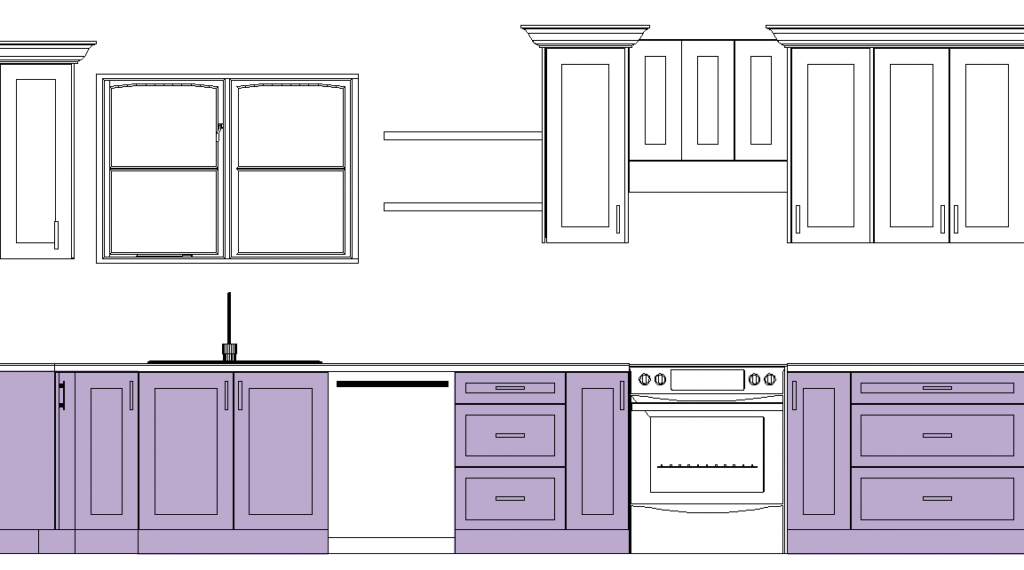
      Base Cabinets— The workhorses under your countertop

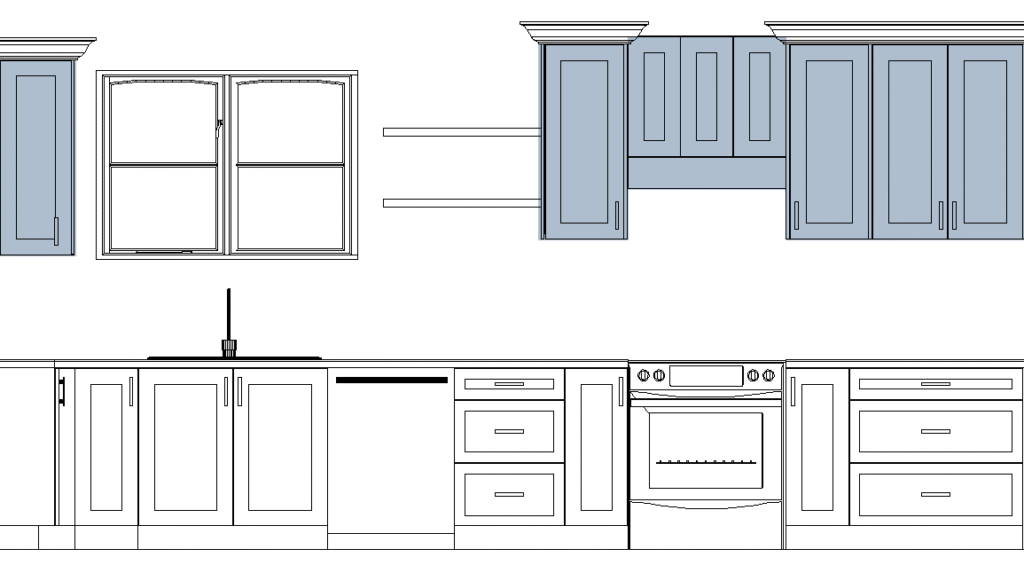
      Base Kitchen Cabinets highlighted on Kitchen Elevation Diagram

      Base cabinets carry most of the workload: cookware, cutlery, trash, and heavy drawers. Common modules:

      • Open cabinet
      • Door only cabinet
      • 3 Drawer unit
      • Combo Door and Drawer unit

      Wall/Upper Cabinets— Floating storage

      Wall Kitchen Cabinets highlighted on Kitchen Elevation Diagram

      Uppers keep dishes and glassware off the counter. They are often crowned with matching top mouldings, making them the most visually prominent cabinets in the kitchen.

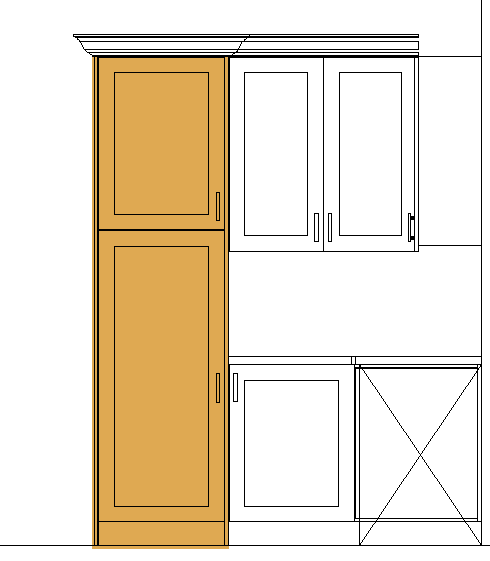
      Tall/Pantry Cabinets— Vertical capacity & appliance towers

      Pantry Kitchen Cabinet highlighted on Kitchen Elevation Diagram

      Tall units solve bulk storage and allow oven/microwave towers or broom/utility closets. A full-height pantry can host fixed shelves or pull-out pantries for easy access. Fridge surrounds use tall side panels for a built-in look.

      Corner Cabinetry—Angled solutions

      Corner cabinetry isn’t a standalone cabinet type—it’s a configuration that applies to both base and upper runs. In practice, homeowners typically choose one of three options.

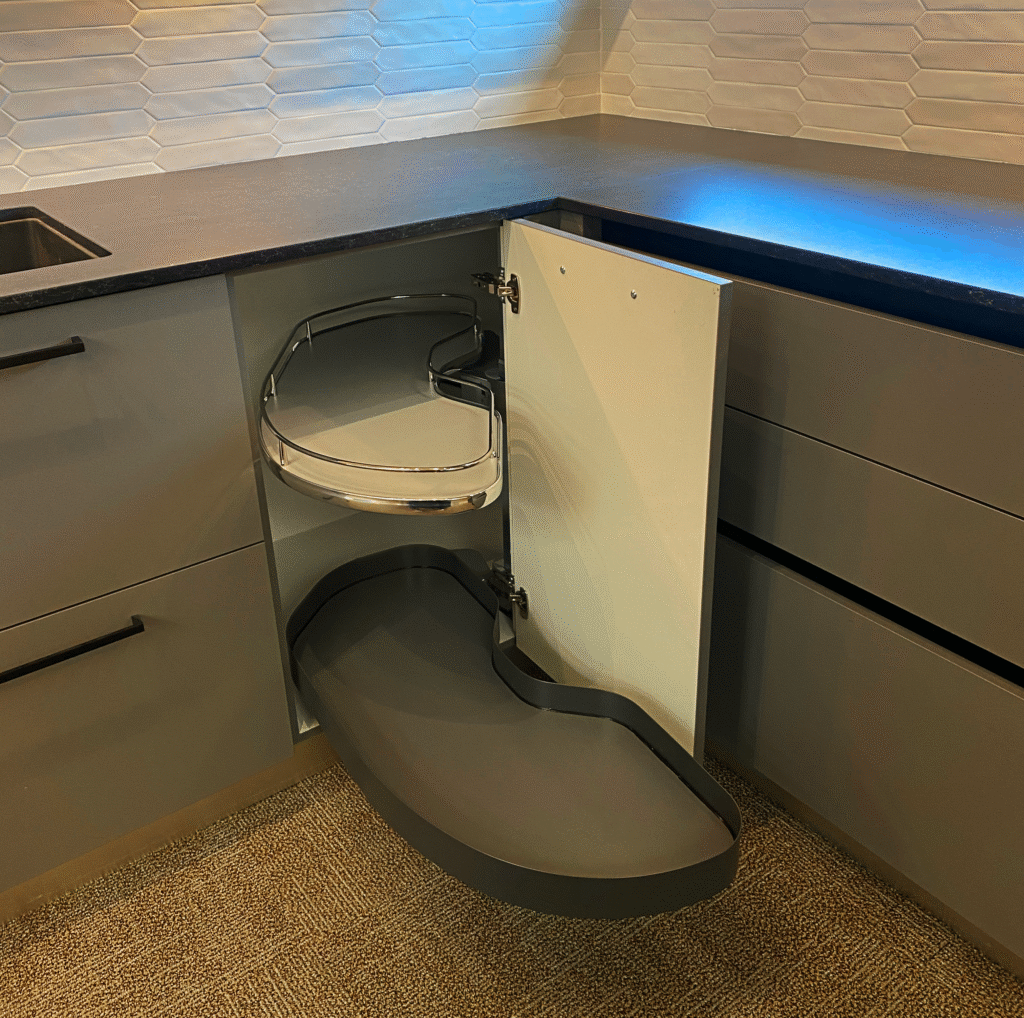
      Lazy Susan

      A rotating trays system that brings items around to the opening.

      Corner Cabinet with Metal Lazy Susan

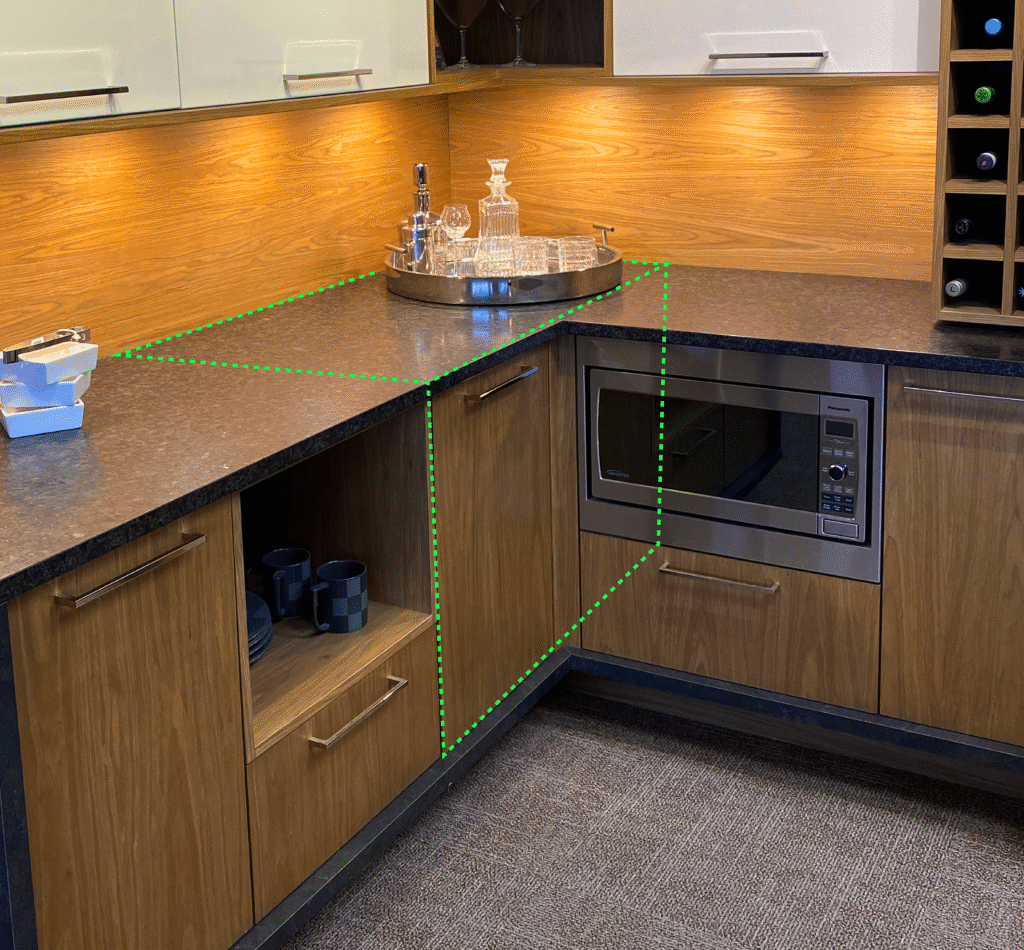
      Blind Corner

      AKA Magic Corner Cabinets. One run extends into the corner with a blind section, providing extra space.

      Blind Corner Cabinet and Magic Corner

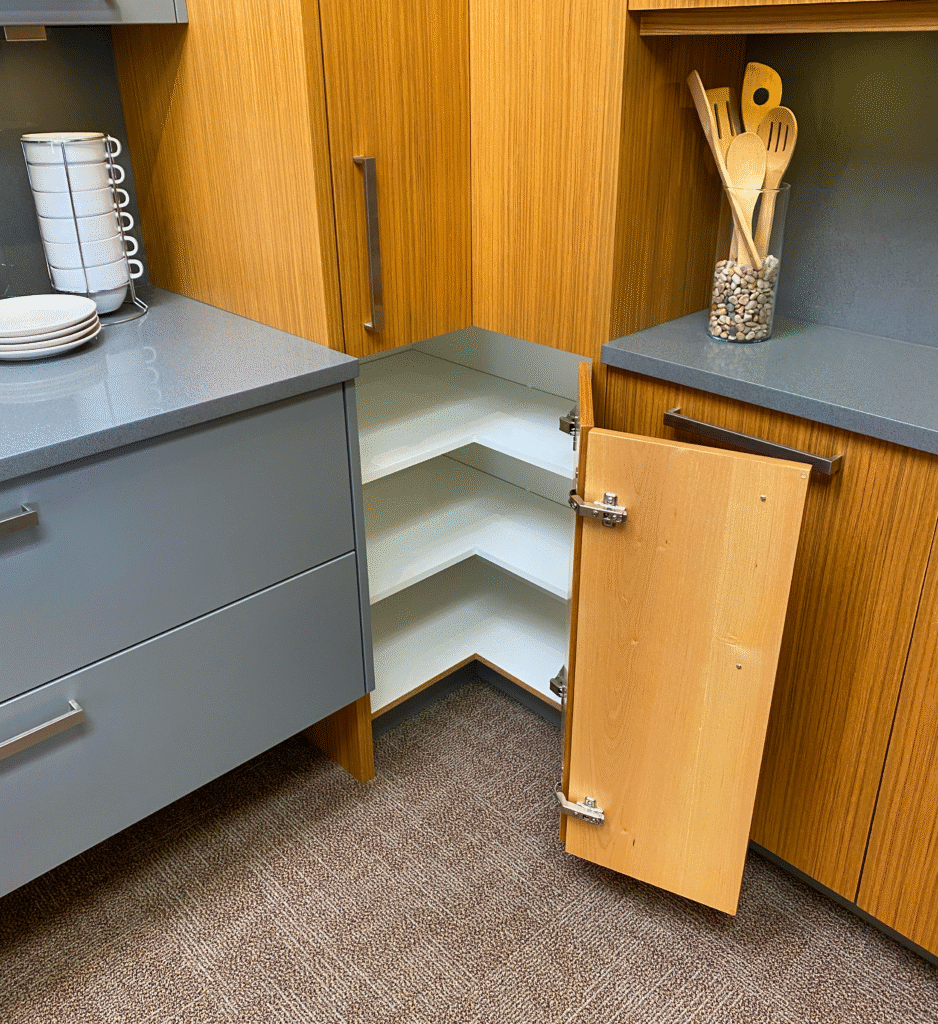
      L-Shaped Cabinet

      An L-corner cabinet with fixed L-shaped shelves.

      L Shape Corner Cabinet

      Door Styles

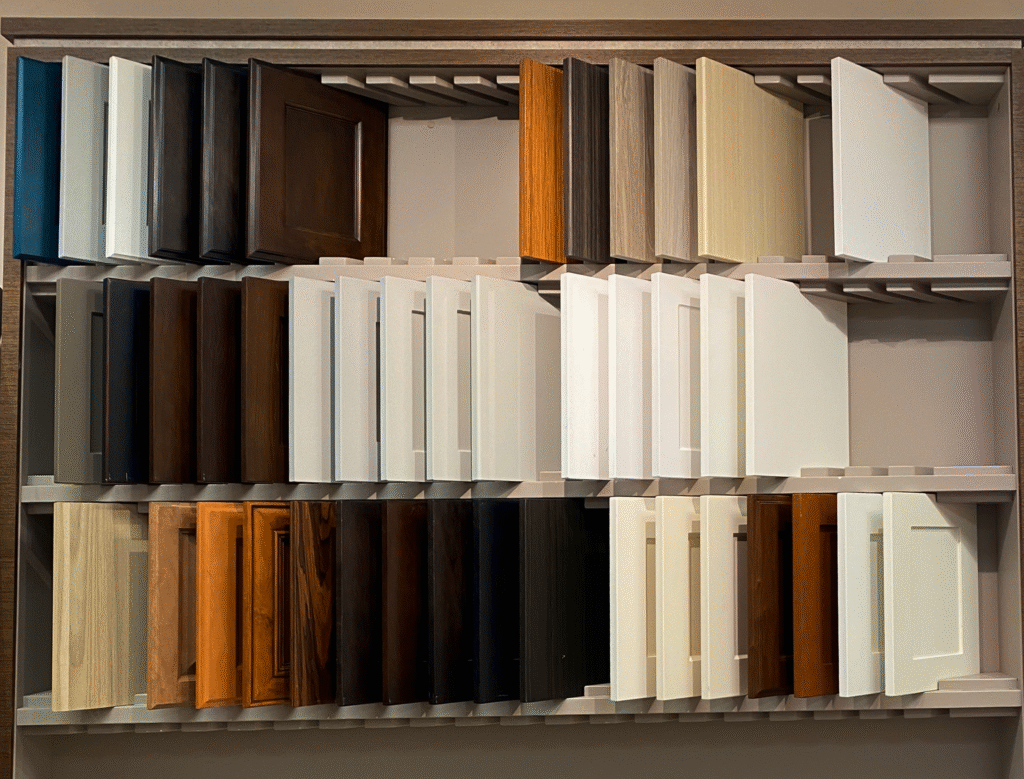
      Wall of Cabinet Doors with multiple styles

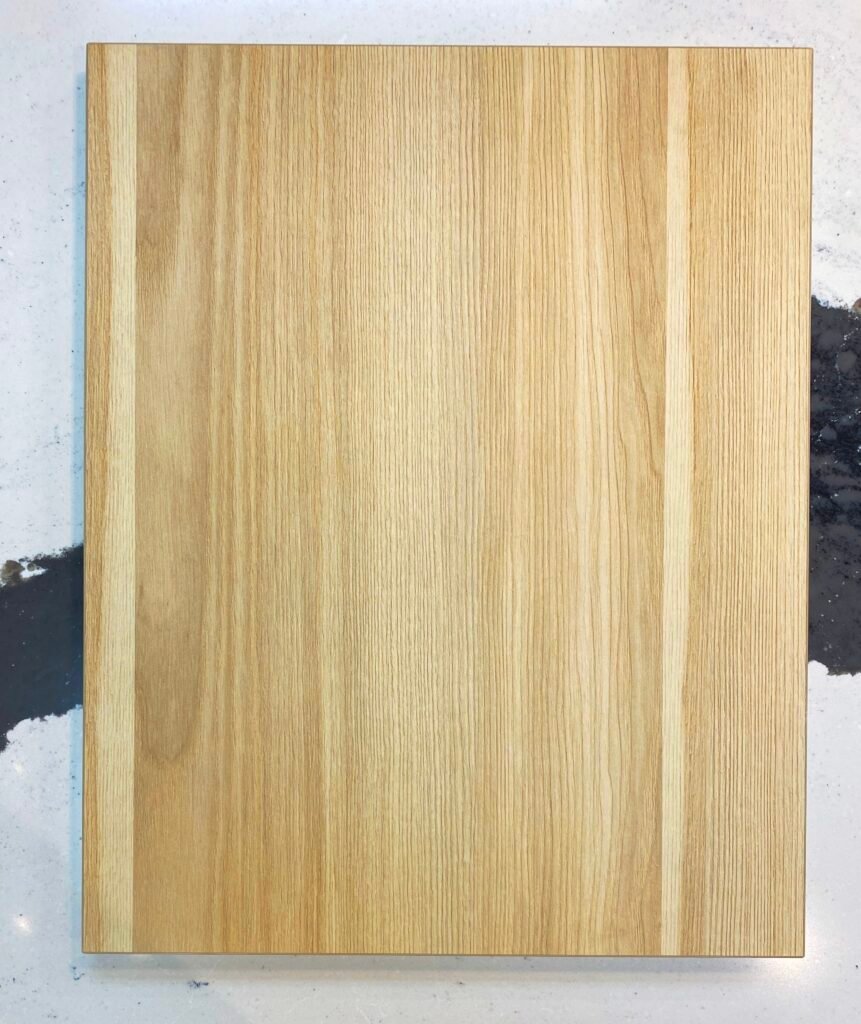
      Slab/Flat

      Also known as ‘Contessa’. Minimalist & modern; pairs well with wood veneers or high-pressure laminates.

      Slab cabinet door, oak laminated

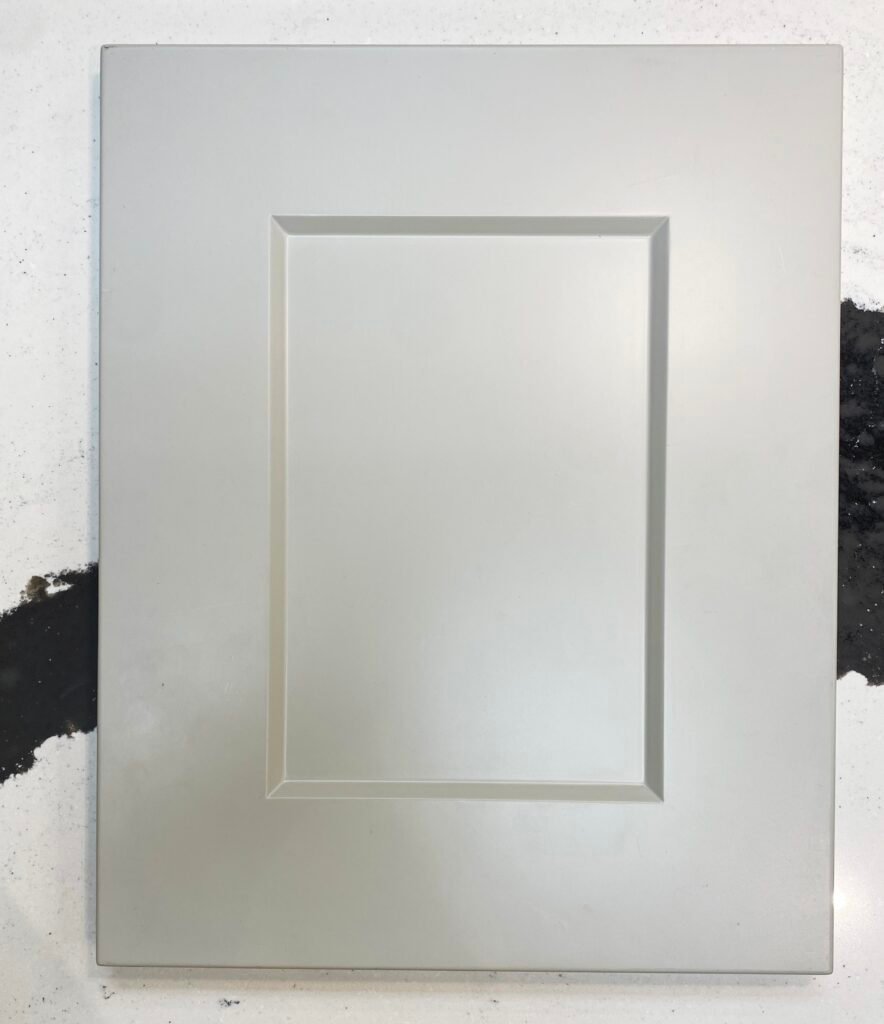
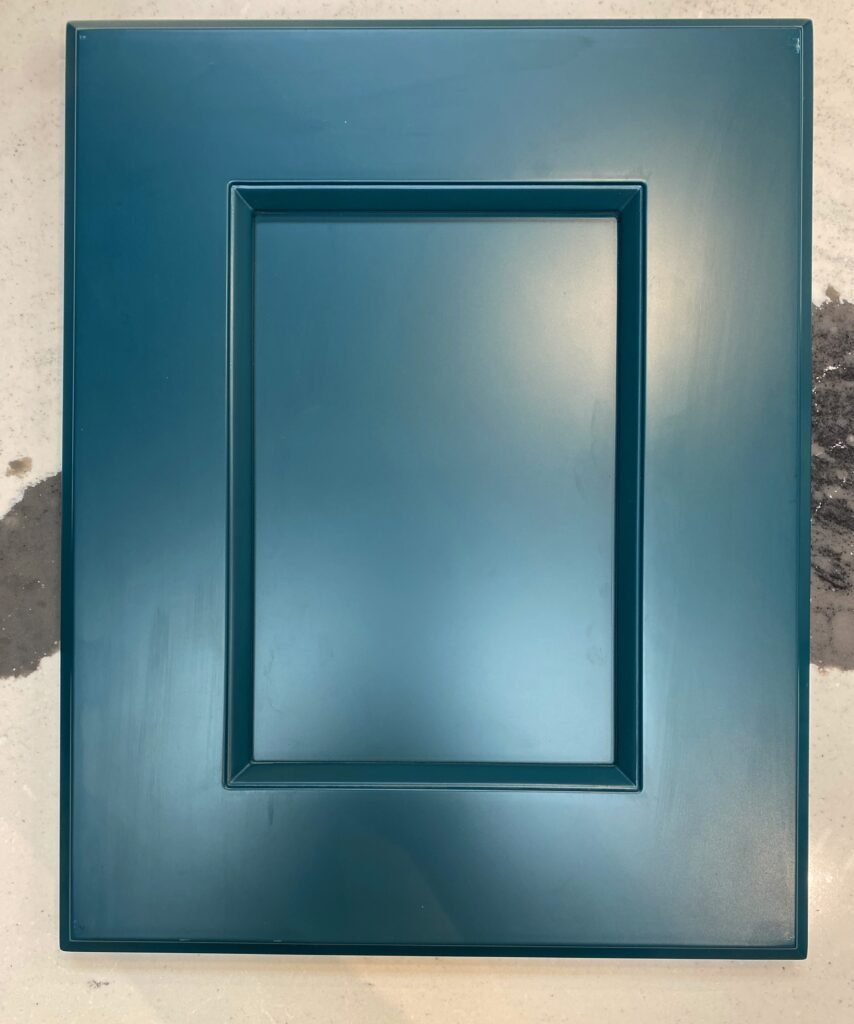
      Shaker

      1, 3 or 5 piece frame with recessed center panel. Timeless style.

      Painted shaker cabinet door with clear matte finish

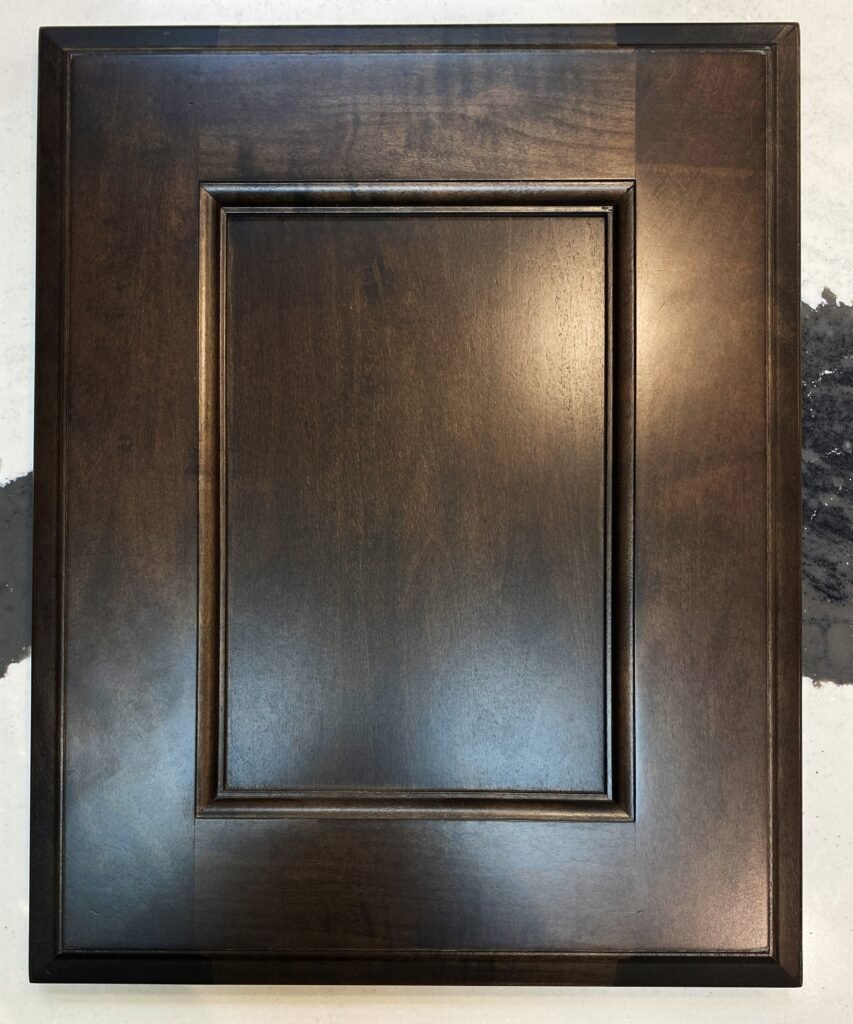
      Heritage

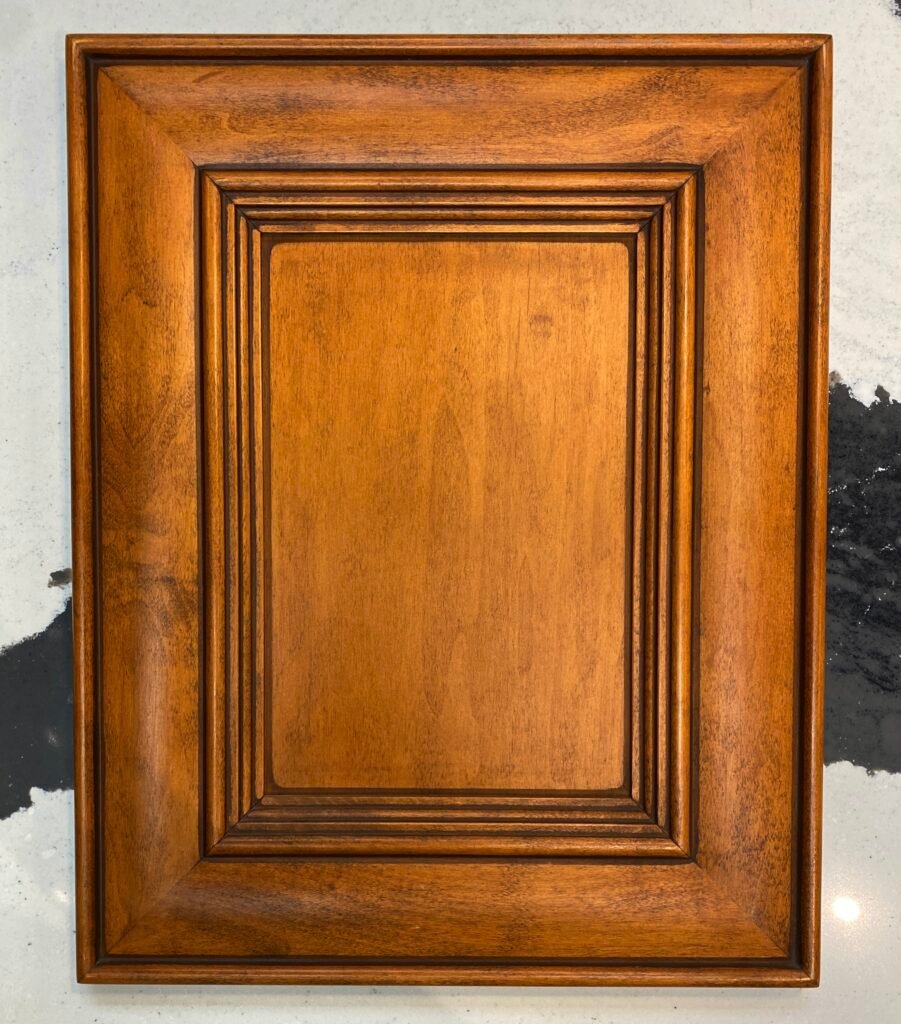
      A traditional raised-panel door featuring Roman ogee profiles on the inner frame and panel edge for added shadow and character—ideal for classic, formal kitchens.

      Heritage raised-panel cabinet door with Roman ogee profile, custom stain

      Victorian

      An ornate style inspired by 19th-century design, it shows off its applied moldings, arched rails and raised panels.

      Victorian cabinet door with applied molding and arched raised panel, custom stained

      Windsor

      Mitered-frame door with decorative inside molding; delivers a polished, transitional look.

      Windsor mitered-frame cabinet door with decorative inner molding, painted finish

      Westchester

      A recessed-panel style with refined profiling on the frame—reads more dressed-up than Shaker but cleaner than ornate raised-panel doors; great for transitional kitchens. 

      Production Insight

      MDF doors deliver crisp, paint-ready edges and consistent planes; while they don’t mimic live wood grain, they excel when color control is priority. Thermofoil achieves a smooth, factory look at lower cost but is less forgiving to heat than paint on MDF.

      Learn more about cabinet door materials [LINK a post de materiales]

      Finishes & Colours

      Two-tone kitchen cabinets: white uppers with walnut base cabinets

      Key considerations

      • Painted whites & soft neutrals brighten spaces and pair easily with countertops
      • Grays/Greige & muted greens read modern while hiding minor smudges.
      • Two-tone (light uppers, darker bases or a wood island) adds depth and zoning.
      • White oak (straight grain) & walnut (rich, warm) add natural texture; expect higher price and, often, longer lead times versus paint-grade MDF

      Standard Sizes vs Custom Parts: How Homeowners Save Time & Money

      Using standard modules for 90% of a layout speeds quoting, fabrication, and installation. Reserve custom for the last inches—corners, fillers, trims, and one-off organizers. This approach consistently shortens schedules in Vancouver shops and reduces measurement risk on site.

      Standard Cabinet dimensions

      Cabinet typeWidthsHeightsDepthNotes
      Base12-48″ (3″ steps)34½ (without countertop)24″36″ with countertop
      Wall/Uppers9-36″ (3″ steps)18-42″ (3″ steps)12″18″ clearance above countertop is common
      Tall/Pantry18-36″ (3″ steps)84 – 96″ + (3″ steps)12″ & 24″Floor-to-ceiling storage potential

      RTA (Flat-Pack) vs Pre-Assembled: Pros, Cons & Timelines

      RTA / Flat-Pack

      Lower shipping volume and price; installer skill has a big impact on fit and finish.

      Pre-Assembled

      Factory consistency and time saved on site; easier for small crews to hit deadlines.

      Vancouver takeaway

      For single-family remodels, Pre-Assembled cabinets dramatically reduce on-site labor.

      Hardware 101: Soft-Close Hinges, Undermount Slides, Knobs & Pulls

      [PHOTO] – Close-up of soft-close hinge and full-extension undermount slide

      Pulls

      Alongside door style, cabinet pulls set the tone for the kitchen’s design and character.

      Drawer Slides

      Side-mounted drawer systems offer strength and stability, which is why they’re often preferred over undermount slides.

      Hinges

      Soft-close hinges are standard across many lines; they prevent slamming and protect finishes.

      Layout & Measuring Guide (Step-by-Step)

      1. Record the room: wall lengths, ceiling height, windows/doors, and all utilities.
      2. Mark fixeds: range, fridge, dishwasher, and required clearances.
      3. Apply a size matrix: start with standard base/wall widths; aim for symmetry around sink/range.
      4. Corner strategy: decide Lazy Susan vs blind-corner early; it changes adjacent widths.
      5. Appliance specs: confirm cutouts, ventilation, and power before ordering.

      Production perspective

      Managing door and face alignment is easier when boxes are standard; custom trims and valances come last to hide tiny tolerances.

      Lead Times in Metro Vancouver (Cabinets Only)

      What to plan for locally (experience-based):

      • Full kitchen cabinet packages: 6–8 weeks from final sign-off to delivery.
      • If there’s heavy customization or painted finishing, add 2–4 weeks.
      • These estimates exclude countertops and on-site installation.

      Scheduling tip from local production: verify door and specialty-part lead times before booking trades; small upstream delays can cascade.

      Refacing or Repainting vs New Cabinets

      Refacing

      Keep boxes, replace doors/drawer fronts and visible panels. Faster than full reno; ideal when layout stays and boxes are sound.

      Repainting

      Budget-friendly refresh for paint-grade doors. Surface prep is critical for durability.

      New Cabinets

      Best when layout, storage, or box integrity need a reset. Choose this route to add drawers, tall pantry, or corner solutions.

      Rule of thumb

      If the layout works and boxes are solid, refacing or repainting is often DIY-friendly and it can stretch a tight budget, though results vary.

      For lasting function and durability, starting fresh is usually the smarter choice.

      Local Buying Guide for Homeowners

      Service Areas in Metro Vancouver

      • Focus on standard modules across most of the run for faster quoting and fabrication.
      • Use custom only where it counts—corners, trims, specialty pull-outs.
      • Confirm lead times with suppliers/finishers early (especially doors).
      • Typical service areas: Vancouver, Burnaby, Richmond, Surrey, Coquitlam, North Shore.

      FAQs— Planning & Operations (Metro Vancouver)

      Below are practical homeowner questions focused on planning, sequencing, site conditions and quoting—topics that typically create delays or cost overruns.

      What measurements do I need before requesting a quote?

      Room width/length, ceiling height, window/door positions, appliance specs (fridge/range/dishwasher), and preferred sink size.

      Do cabinets go in before or after flooring and paint?

      Typically after drywall/paint touch-dry and after finished flooring.

      What are the most common issues that delay installs?

      Late appliance changes, and unleveled floors/walls.